
 Book a Strategy Call

Competitor analysis isn’t about copying what others do. It’s about uncovering directional insights that help you make better strategic decisions. Like what to test, what to avoid, and how to structure your own campaigns more intelligently.
In this post, we break down a simple, step-by-step process to reverse-engineer a competitor’s Google Ads setup. This approach helps you uncover keyword priorities, ad messaging patterns, landing page structure, and overall campaign logic.
1. Extract Competitor Keywords
The foundation of any solid Google Ads strategy is understanding what keywords your competitors are targeting.
Tools to Use
-
SpyFu
-
Semrush
These tools don’t give exact spend or placement details, but they do provide directional keyword data that’s actionable.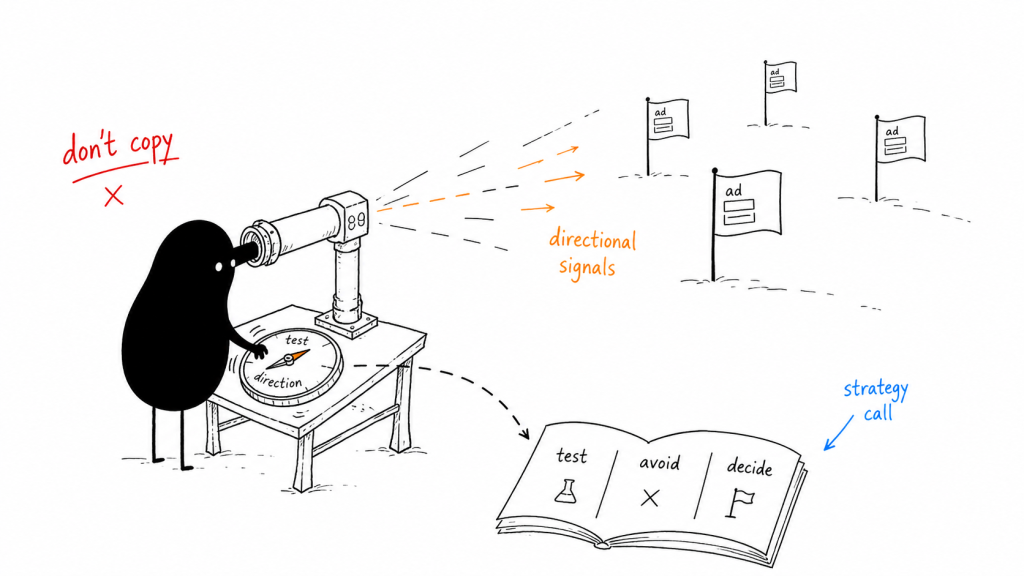
How to Analyze
-
Export keyword lists from competitor domains.
-
Use AI to categorize keywords into:
-
Brand vs Non-Brand
-
Keyword topics/themes
-
This categorization reveals how a competitor could structure campaigns and ad groups.
2. Analyze Competitor Ad Messaging
Understanding what competitors are saying in their ads gives you insight into their positioning, offers, and calls-to-action.
How to Collect Ads
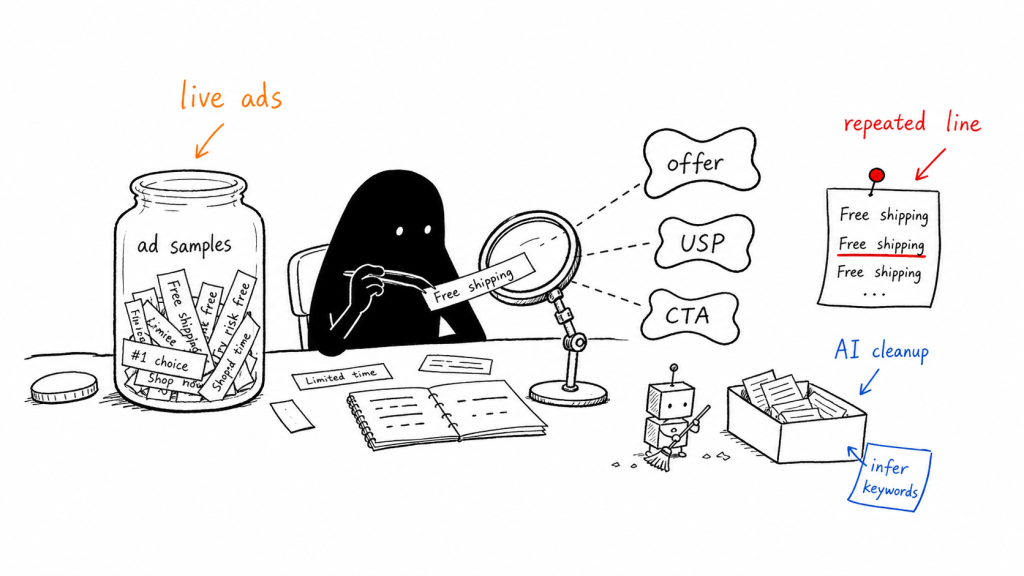
Use Google’s Ad Transparency Center to pull all active search ads for a given competitor.
What to Do With the Data
-
Screenshot or export ads
-
Use AI to clean and organize into a table
-
Examine:
-
Headlines
-
Offers
-
Unique selling points
-
Calls-to-action
-
-
Have AI infer likely keywords from headlines (surprisingly useful)
This step reveals messaging patterns competitors are testing in the real world.
3. Audit Landing Pages and URLs
Most keyword and ad research tools will show destination URLs your competitors are using.
What to Look For
-
How pages align with specific keyword themes
-
Patterns in layout, offers, and messaging hierarchy
-
Whether campaigns use dedicated landing pages or generic site pages
Understanding URL structure and page relevance helps you benchmark your own landing page strategy.
4. Reconstruct UTMs and Campaign Structure
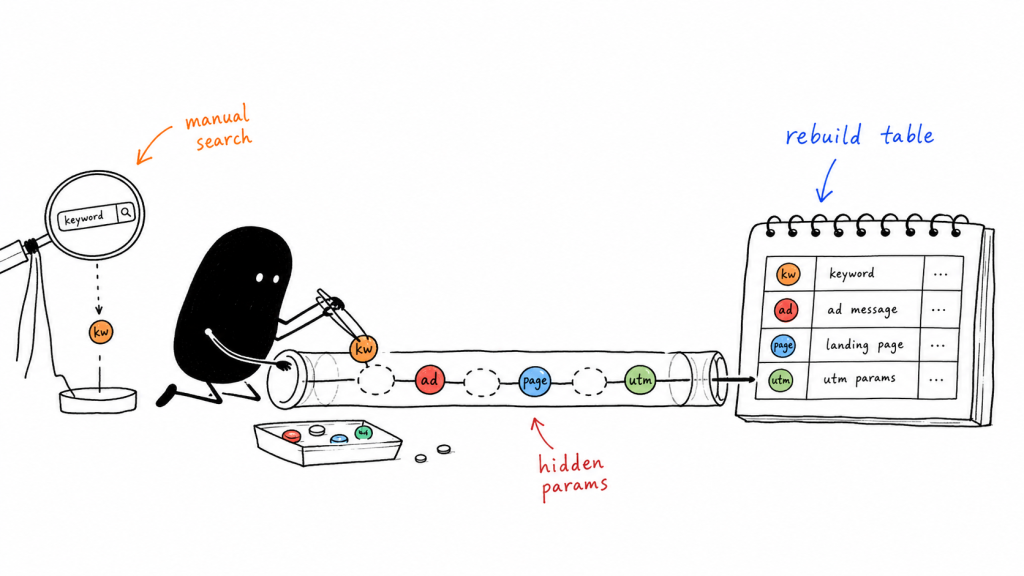
UTMs are often hidden, but they’re critical for understanding segmentation logic.
Manual Research Steps
Because most tools don’t show full URLs with UTMs:
-
Perform the keyword searches you observed in step 1
-
Capture live ads and landing pages
-
Note URL patterns and UTM structures
-
Use AI to reconstruct a table showing:
-
Keyword
-
Ad message
-
Landing page
-
UTM parameters
-
This process gives you a clearer view of how campaigns might be segmented and tracked.
What You’ll Learn From This Process
Following these steps gives you a high-level view of how competitors are structuring their:
-
Keyword targeting
-
Ad creative and messaging
-
Landing page strategy
-
Tracking and segmentation logic
You can then choose which layers warrant deeper analysis: whether that’s drilling further into keyword intent, refining your own ad messaging, or improving landing page relevance and offers.
Final Thoughts
No competitive dataset is perfect, but the insights you derive from this process are directionally useful and testable.
Reverse-engineering competitor Google Ads setups isn’t about replication. It’s about strategic awareness that informs your own campaigns and uncovers opportunities you might otherwise miss.
If you’re short on time or want an experienced team to handle this type of analysis, campaign structure, and ongoing optimization, Bend Marketing offers full Google Ads management designed to drive qualified leads, not wasted spend.

